Education & Learning
Education is a search-first business. A prospective student is comparing institutions they have never visited, using information that is scattered, inconsistent and frequently out of date.
The catalogue is the product
Courses, fees, eligibility and dates are what a student is actually looking for, and they change every cycle. A brochure site that shows them as a PDF is answering a question with a download.
- Every course a real page rather than a filter
- Fees and dates held as data, not as text
- Changes published without a developer
Found before it is chosen
Students search for a course in a place, not for an institution by name. Which means the pages that earn traffic are the ones nobody thinks to build — the combinations, not the homepage.
- Real routes for course, city and stream
- Server-rendered so crawlers see the content
- Performance treated as crawl budget
Wrong information costs more here
A student choosing on an out-of-date fee is making a financial decision on bad data. Showing nothing is better than showing a plausible number nobody can source.
- Every published fact traceable to its source
- Empty rather than guessed where data is missing
- A publish bar a record has to clear
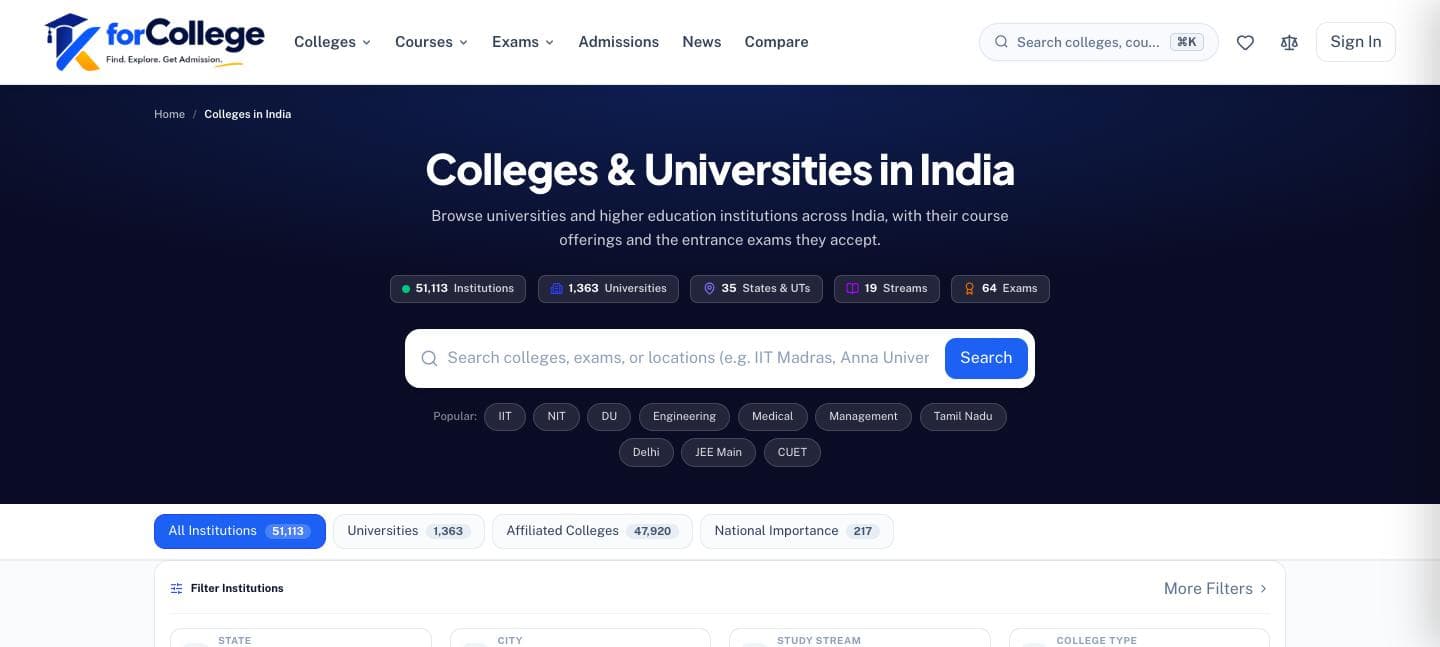
A project we have shipped here
The services that come up most here
The product your customers actually use — sites, web apps and portals that load fast and can be found.
The systems that run the business — backends, APIs and the integrations between things that were never designed to talk.
The owned funnel — technical SEO, content, email and lifecycle, measured against pipeline.
Does this sound like your business?
Describe how yours actually runs — including the parts that do not fit the pattern above. Those are usually the interesting ones.
Book a discovery call